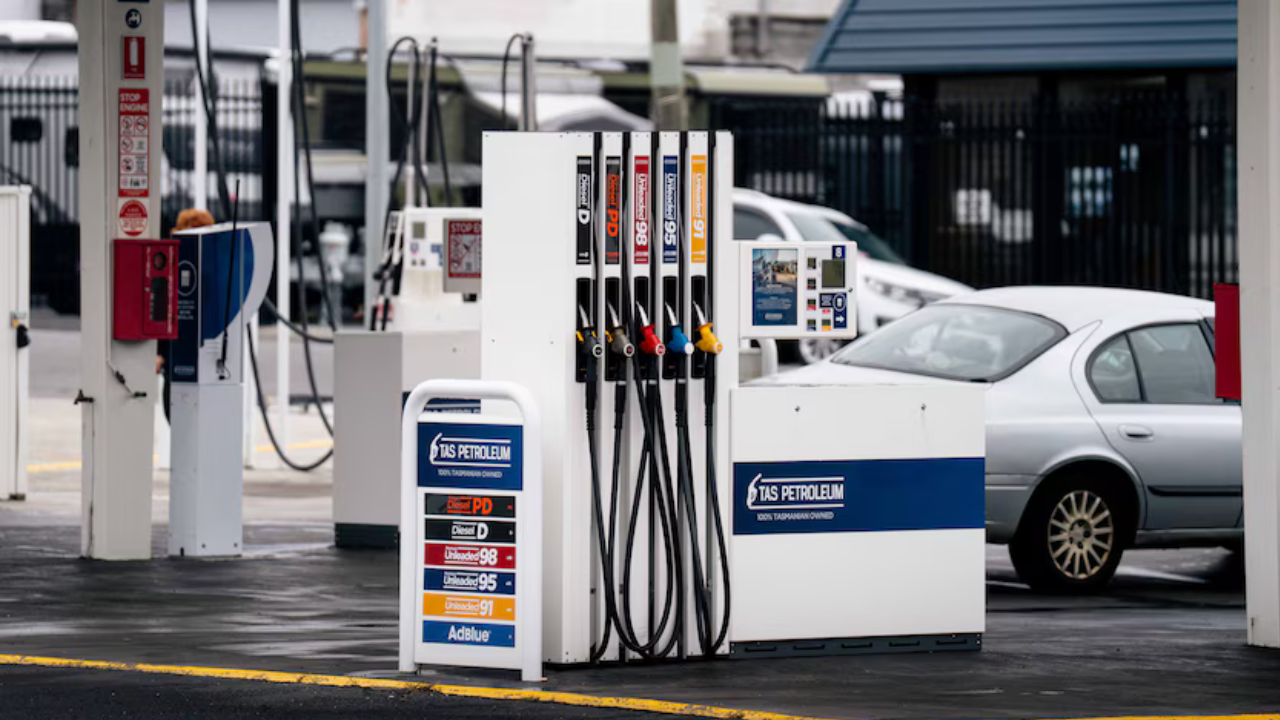
A Fuel Giant Reads the Writing on the Wall
It’s not every day you hear one of Australia’s biggest fuel suppliers talk openly about the decline of petrol and diesel, but that’s exactly what’s happening. Ampol chief executive Matt Halliday has been candid in recent comments about the accelerating shift toward electric vehicles, even as his own company continues to lean on liquid fuels as its core business. It’s a telling sign of just how seriously the industry now takes the long-term shift away from the bowser.
EVs Are Already Reshaping the Numbers
Halliday pointed out that electric vehicles accounted for almost one in five new car sales in Australia last month, a figure that climbs even higher once plug-in hybrids are counted alongside pure EVs. That’s a significant jump from just a few years ago, when EVs were still a niche curiosity rather than a mainstream buying decision. It’s this kind of momentum that has fuel companies like Ampol rethinking their long-term strategy, rather than simply assuming petrol demand will hold steady indefinitely.
Why the Transition Will Still Take Years
Despite the accelerating EV uptake, Halliday was quick to note that a broader nationwide shift won’t happen overnight. The average car in Australia is around 11 years old, meaning even a surge in new EV sales today takes over a decade to meaningfully filter through and replace the existing fleet on our roads. It’s a reminder that headline sales figures don’t tell the whole story, older petrol and diesel vehicles will remain a common sight on Australian roads for a long while yet, even as new car sales tilt further toward electrification each year.
Diesel and Jet Fuel Remain the Bigger Headache
Interestingly, Halliday flagged that passenger car electrification isn’t actually the industry’s biggest long-term concern. Diesel and jet fuel, used heavily in freight, heavy machinery and aviation, don’t have an easy, economical replacement on the table right now. As he put it, Australia is going to need reliable fuel security and supply “for a long time to come,” regardless of how quickly everyday drivers switch to EVs. It’s a distinction that gets lost in the broader conversation about the end of petrol cars, the passenger vehicle shift is only one piece of a much bigger fuel security puzzle.
Hedging the Bet With EV Infrastructure
Rather than resisting the transition, Ampol is positioning itself to profit from both sides of it. The company is pairing its existing network of petrol stations with EV charging infrastructure, aiming to capture charging demand from renters and apartment dwellers who can’t easily plug in at home. It’s a pragmatic strategy, treating EV charging as a lower-margin but future-proof addition to its traditional fuel business, rather than betting everything on one side of the transition. Broader industry modelling has previously suggested that up to 80 percent of petrol stations globally could become unprofitable within 15 years if they don’t adapt in a similar way.
A Fragile Fuel Supply Chain in the Background
All of this is playing out against a backdrop of a genuinely fragile Australian fuel supply chain. The country’s refining capacity has shrunk from seven refineries in 2013 down to just two today, Ampol’s Lytton plant in Brisbane and Viva Energy’s Geelong facility in Victoria, leaving the nation with thinner reserves to absorb any shocks. Recent global disruptions, including conflict affecting Middle Eastern oil supply routes, have already pushed up local fuel prices and exposed just how quickly international instability can ripple through to what Australians pay at the pump.
What It All Means for Drivers
Taken together, the message from Australia’s fuel industry is less “petrol is finished tomorrow” and more “the ground is shifting, and we’re adapting accordingly.” EVs are growing fast and will keep growing, but the transition away from petrol and diesel will likely stretch across the next decade or more, shaped as much by ageing fleets, charging infrastructure and diesel-dependent industries as by new car sales figures. For everyday drivers, it means petrol stations aren’t disappearing any time soon, but they’re quietly transforming into something broader than just a fuel stop.
Quick Facts
| Detail | Information |
|---|---|
| EV share of new car sales | Almost 1 in 5 (higher including PHEVs) |
| Average age of Australian cars | ~11 years |
| Australian refineries remaining | 2 (Ampol Lytton, Viva Energy Geelong) |
| Refineries in 2013 | 7 |
| Ampol’s strategy | Pairing petrol stations with EV charging |
| Biggest long-term fuel concern | Diesel and jet fuel, not passenger petrol |
FAQs
1. Did Ampol actually say petrol vehicles are ending soon?
Not exactly. Ampol’s CEO acknowledged that EV sales are accelerating and predicted a genuine long-term shift, but he was clear this transition will take years, largely because the average Australian car is around 11 years old.
2. Why does Ampol care about EVs if it sells petrol and diesel?
Ampol is hedging its bets by adding EV charging infrastructure alongside its existing petrol stations, aiming to stay relevant and profitable regardless of how quickly the market shifts toward electric vehicles.
3. Is diesel or petrol the bigger concern for Australia’s fuel future?
According to Ampol’s CEO, diesel and jet fuel are actually the bigger long-term worry, since there’s currently no economically viable large-scale replacement for them, unlike passenger vehicles which have a clear path toward electrification.
4. How many oil refineries does Australia have left?
Just two, Ampol’s Lytton refinery in Brisbane and Viva Energy’s Geelong refinery in Victoria, down from seven refineries operating as recently as 2013.
5. Will petrol stations disappear as EVs become more popular?
Not immediately, but many are expected to evolve rather than vanish. Industry modelling suggests a large share of fuel stations could struggle financially over the next 15 years unless they add EV charging and other future-fuel services, which is exactly the strategy companies like Ampol are already pursuing.