A Historic Month for Australian Car Buyers
June 2026 will go down as the biggest month the Australian new-vehicle market has ever recorded. A combined 140,058 new vehicles were delivered to customers, smashing the previous all-time monthly record of 134,171 set back in 2017 and marking a 9.9 percent jump over June last year. It’s a genuinely remarkable result, and electric vehicles were right at the centre of it.
Electric Vehicles Lead the Charge
Battery electric vehicles accounted for 23.3 percent of all deliveries in June, a new record and a staggering leap from just 7.6 percent in the same month last year. That share has climbed steadily and rapidly throughout 2026, rising from 8.4 percent in January to 23.3 percent by June, nearly tripling in the space of six months. Add hybrids and plug-in hybrids into the mix, and electrified vehicles of some kind made up 49.5 percent of everything sold in the country last month, essentially half the entire new car market.
Tesla and BYD Steal the Spotlight
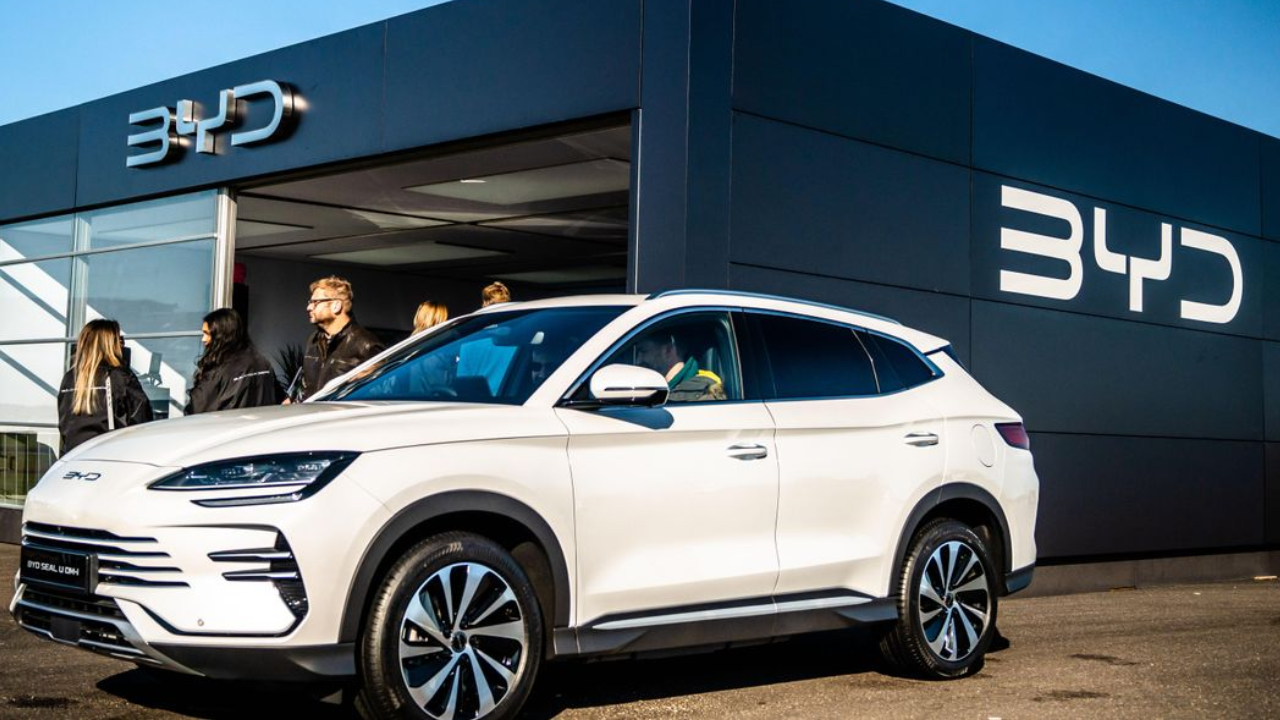
The Tesla Model Y once again topped the overall sales charts, finishing as Australia’s best-selling vehicle for the second consecutive month with a record 8,072 deliveries, comfortably clear of the Ford Ranger and Toyota HiLux behind it. BYD had an even bigger story to tell, delivering a record 18,881 vehicles for the month, up 131.5 percent year-on-year, and finishing just 243 units behind market leader Toyota. That’s the tightest any brand has come to knocking Toyota off the top spot in years, and it’s a genuine changing of the guard playing out in real time.
Petrol and Diesel Losing Ground
While EVs and hybrids surged, traditional combustion vehicles took a real hit. Petrol sales fell around 29 percent to 34,717 units, while diesel dropped 18.4 percent to 31,789 units. FCAI chief executive Tony Weber described the shift as a genuine turning point for the industry, pointing to global uncertainty, including conflict in the Middle East and volatile petrol prices, as a factor sharpening consumer interest in vehicles that reduce exposure to fuel costs. Weber was careful to note that while some of this is a short-term reaction to fuel prices, part of the EV growth looks like a permanent structural shift in how Australians are buying cars.
China’s Growing Grip on the Market
China has firmly cemented itself as Australia’s largest single source of new vehicles, supplying 46,592 units in June alone, or 35.5 percent of the entire market, ahead of Japan, Thailand, Korea and Germany. Once Chinese-built brands like Tesla and Polestar are factored in, vehicles built in China accounted for roughly 39.6 percent of everything delivered in June, edging ever closer to two in every five new cars sold nationally. It’s a dramatic shift in where Australia’s new cars are actually coming from compared to just a few years ago.
SUVs and Utes Still Rule the Roost
Despite all the electrification headlines, traditional favourites haven’t disappeared from the top of the sales charts. The Ford Ranger and Toyota HiLux held onto second and third place overall, and SUVs as a category jumped 17.7 percent month-on-month to 84,059 sales, now representing 64.1 percent of every new vehicle sold in the country. Medium SUVs in particular are becoming an electrification hotspot in their own right, up 45.1 percent for the month and closing in on 30 percent of the total market by themselves, giving buyers more electrified choice in that segment than ever before.
What It Means Going Forward
With BYD closing the gap to Toyota to just a few hundred cars and EV share nearly tripling in six months, the second half of 2026 is shaping up to be one of the most closely watched stretches in Australian automotive history. If BYD can maintain anywhere near its June growth rate, it could realistically take the top spot on the brand ladder for the first time ever. Whatever happens next, June 2026 has already proven that Australia’s shift toward electrified vehicles isn’t a slow, gradual trend anymore, it’s accelerating fast.
June 2026 Australian New-Car Sales Snapshot
| Metric | Figure |
|---|---|
| Total vehicles sold (all sources) | 140,058 (all-time record) |
| Year-on-year growth | +9.9% |
| BEV market share | 23.3% (record) |
| Electrified share (BEV + hybrid + PHEV) | 49.5% |
| Top-selling brand | Toyota (19,124) |
| Closest challenger | BYD (18,881) |
| Best-selling vehicle | Tesla Model Y (8,072) |
| Petrol sales change | -29% |
| Diesel sales change | -18.4% |
| China’s share of supply | 35.5% (VFACTS) / ~39.6% (all sources) |
FAQs
1. How big was June 2026 compared to previous records?
It was the biggest month in Australian new-car market history, with 140,058 vehicles delivered from all sources, comfortably beating the previous record of 134,171 set back in 2017.
2. Did EVs actually outsell petrol and diesel cars combined?
Not quite outright, but electrified vehicles overall, meaning BEVs, hybrids and plug-in hybrids together, made up 49.5 percent of the entire market, essentially level with combustion vehicles for the first time.
3. Is BYD about to overtake Toyota as Australia’s top-selling brand?
Not yet, but it came extremely close in June, finishing just 243 sales behind Toyota. If BYD keeps up a similar growth rate, it’s plausible it could take the top spot in the months ahead.
4. Why did petrol and diesel sales drop so sharply?
A combination of factors is at play, including rising fuel prices linked to global instability and growing consumer appetite for vehicles that reduce exposure to fuel costs, alongside a genuinely expanding range of electrified options across nearly every vehicle segment.
5. Is this EV surge just a short-term reaction to high fuel prices?
According to the FCAI, it’s likely a mix of both. Some of the current spike is tied to short-term fuel price pressures, but industry officials believe a meaningful portion of this shift toward EVs represents a more permanent, structural change in buyer behaviour.